November 21, 2025 · AI Outreach Class
Zhashan Middle School: How AI Can Help Us Learn
Masters of learning, or subjects of technology? A volunteer team from Wuhan Britain-China School visited Zhashan Middle School in Caidian District, joining 53 ninth-graders for a carnival of talks, discussions and poster-making on how AI can truly help us learn.
Event Overview
What happens when AI meets traditional education? On the afternoon of November 21, a volunteer team from Class Elite 2 (Grade 2024) of Wuhan Britain-China School visited Zhashan Middle School in Caidian District, Wuhan, for a science carnival on how AI can help us learn. Students from international and Chinese curricula sat in one classroom, exploring the benefits and risks of AI, how to use it wisely, and how to keep thinking independently and creatively.
Designed and led by student Rao Tianshi, the session ran four parts — a keynote talk, group discussion and synthesis, creative poster showcase, and awards — in about 85 minutes. Fifty-three ninth-graders formed eight groups of six to seven, completing discussions and posters with volunteer mentors, with each group presenting on stage. The team also donated AI books such as AI Changes the Future and A Brief History of AI, plus teaching equipment, to support the school's science education resources.
A feast of discussion, a moment of companionship, a warm memory. This was the first stop of the AI volunteer team's three-school outreach journey: starting from the question of access to AI, the team first confronted the guidance gap here — students without family digital support most lacked guidance on when to use AI and how to verify its answers.
Keynote: The Benefits and Limits of AI
Rao Tianshi opened with real cases from his own studies — AI helping organise notes, practise speaking and search materials, but also shrinking thinking time and growing dependence. Volunteers followed with real-world cases of AI accuracy pitfalls, warning students against false or one-sided outputs.
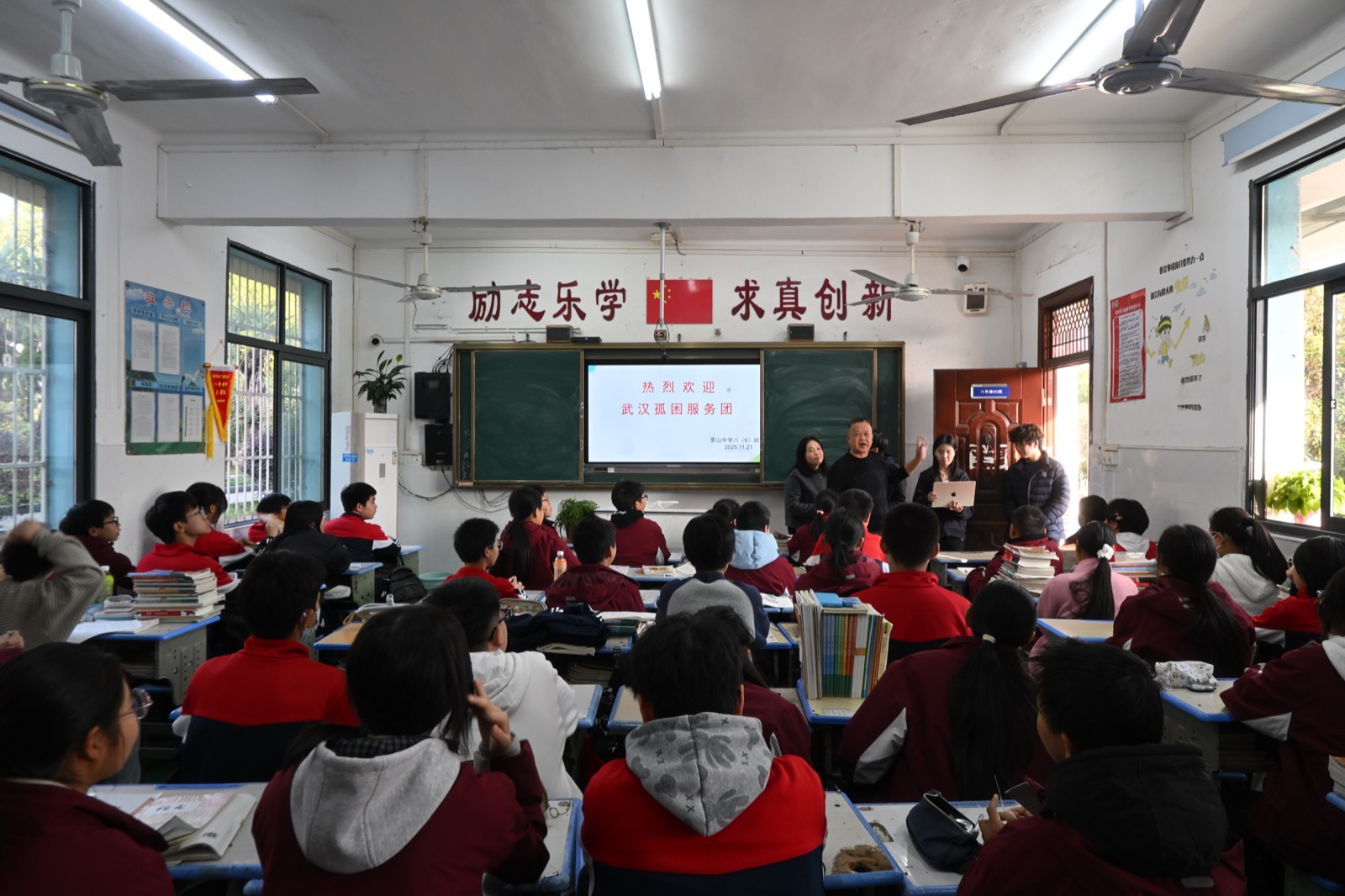
Keynote in session: volunteers join 53 ninth-graders in one classroom
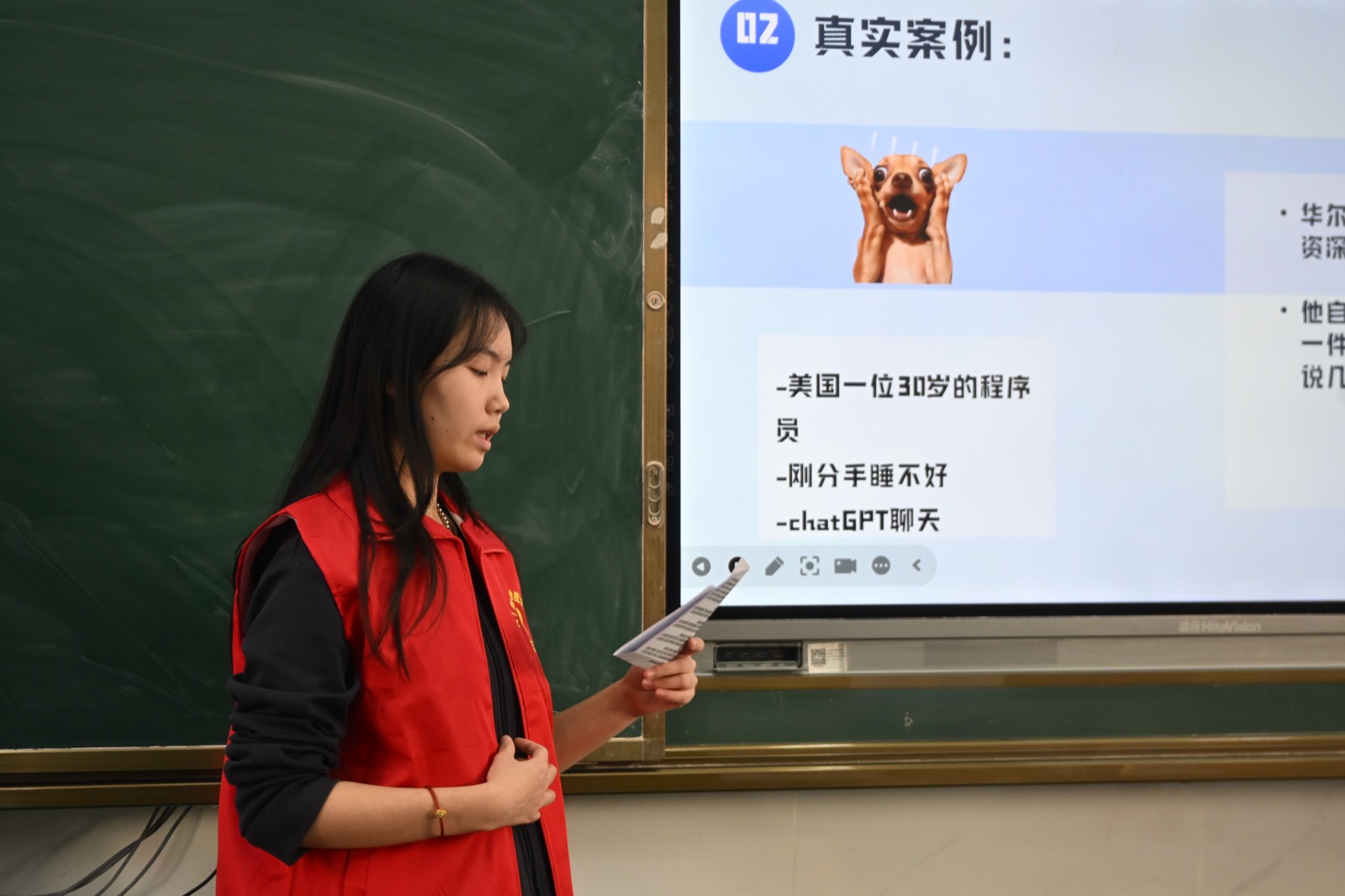
A volunteer explains AI benefits and risks through real cases
Group Discussion & Poster Showcase
Eight groups spent 8–10 minutes on three questions: what have you learned from using AI? Where does AI help most? How do we avoid getting lazy in thinking because of AI? Each group then spent 30–40 minutes co-creating a poster of its most practical AI tips and safeguards against over-dependence, presenting it on stage in 2–3 minutes. Volunteers mentored every group throughout, with backup prompts ready for groups stuck for ideas.
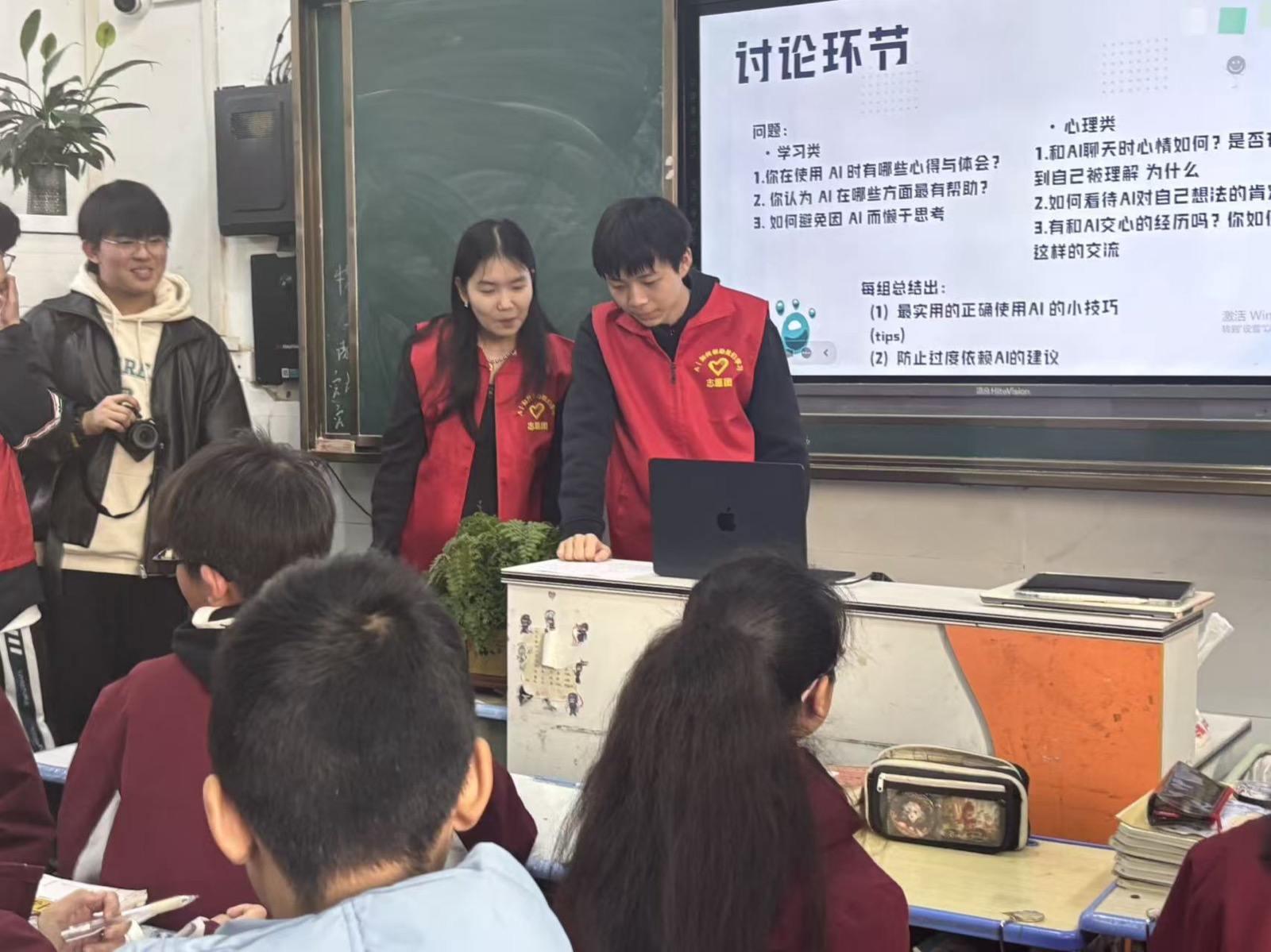
Discussion time: guiding questions and expected outputs on screen
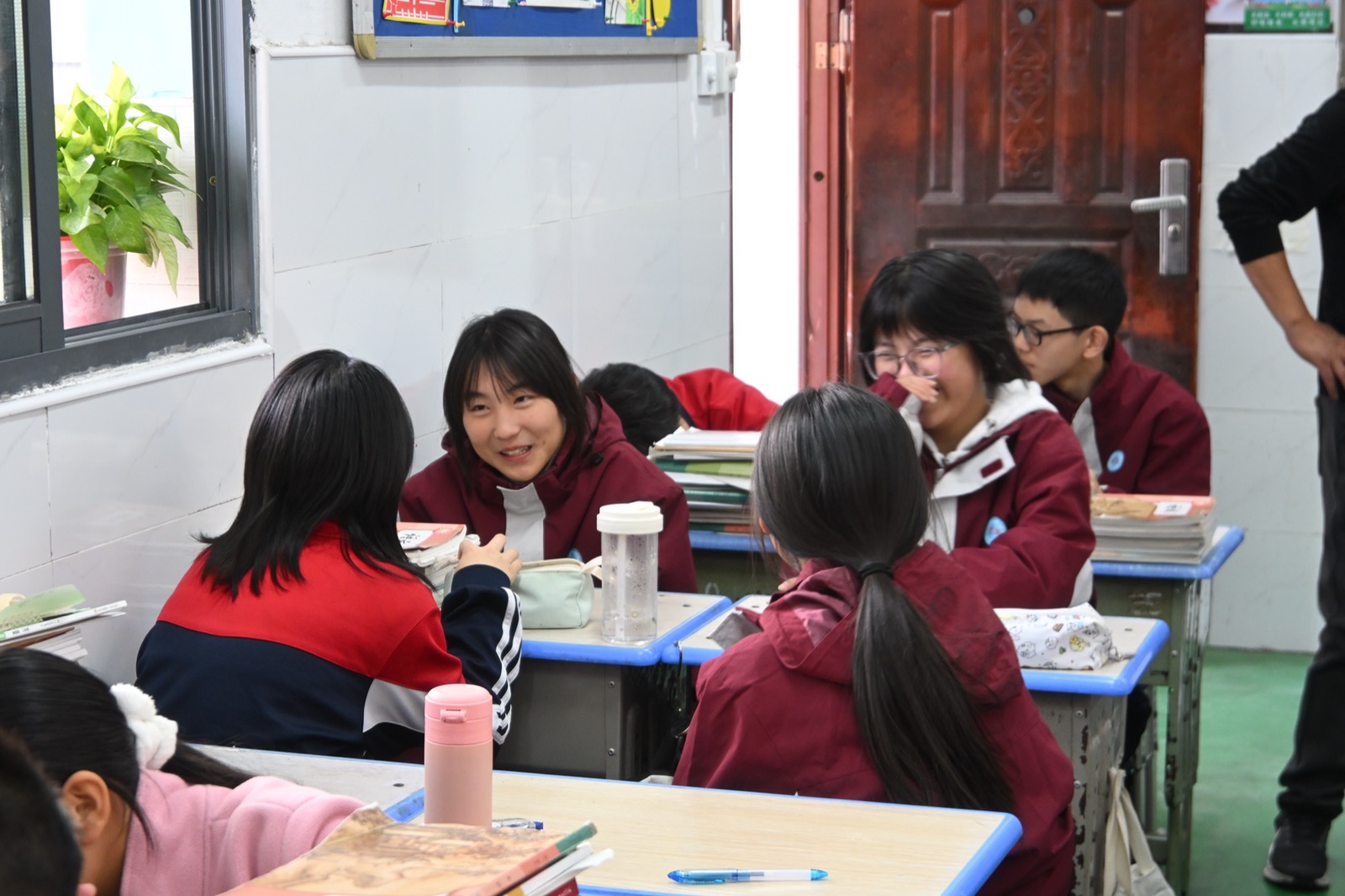
In discussion: students share their experiences using AI
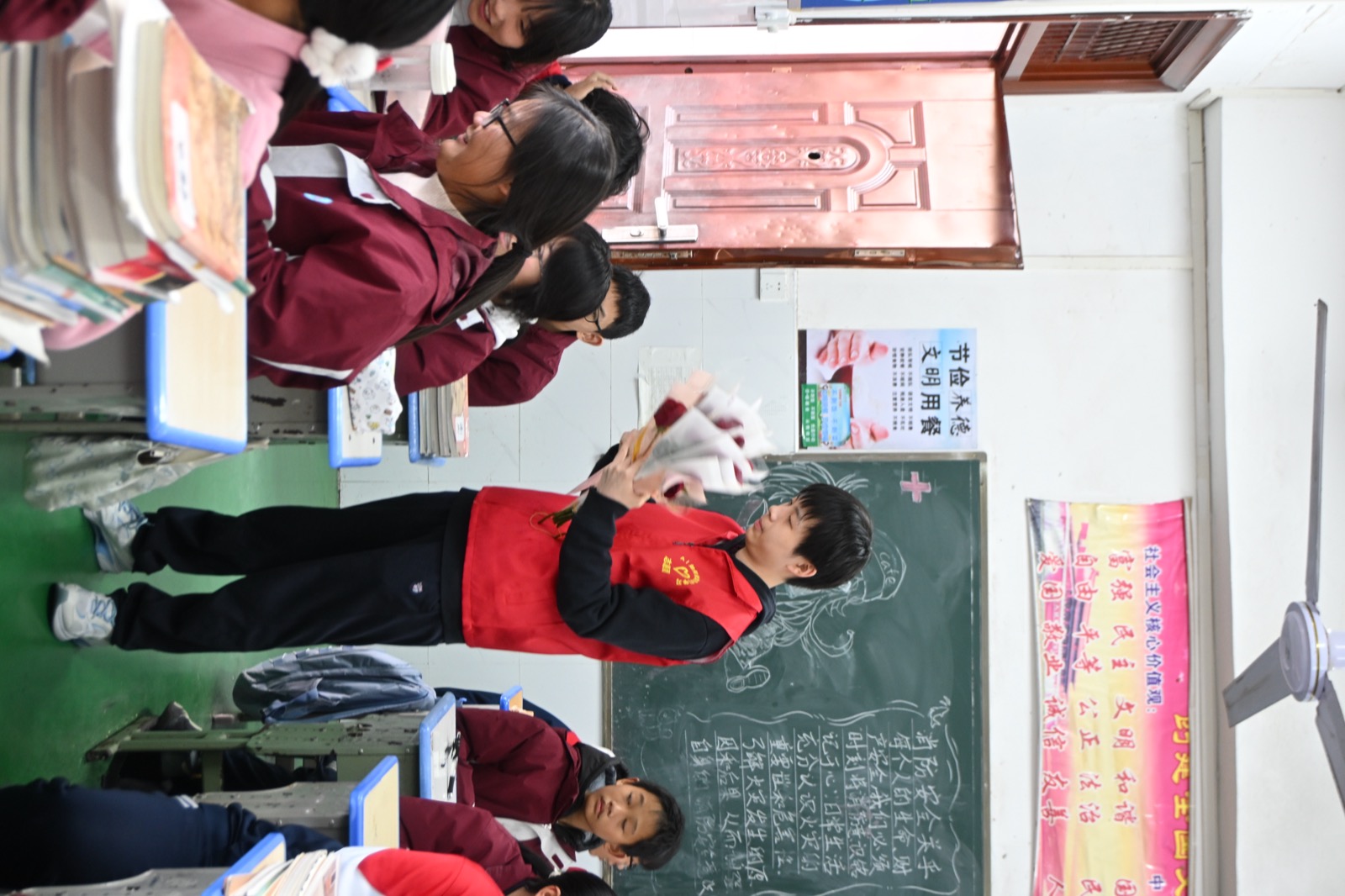
Poster-making: a volunteer guides a group through its creative poster
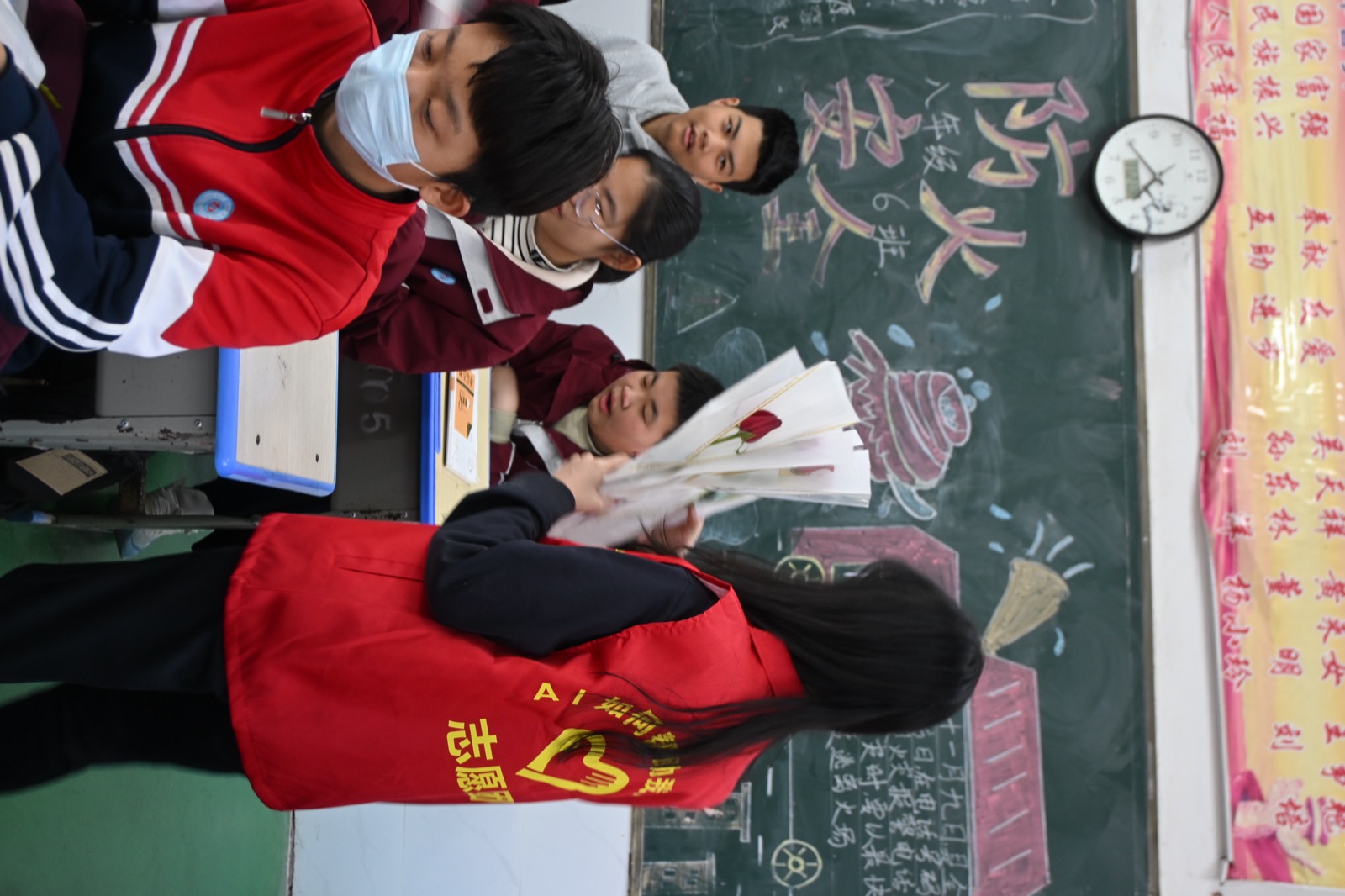
Showcase and awards: a volunteer presents gifts to a winning group
Awards, Donation & Pennant
Teachers and Rao Tianshi jointly awarded Best Creativity, Best Team and Deepest Thinking prizes, with every group receiving stationery, books, USB drives and other souvenirs. After the team donated AI books and teaching equipment, Zhashan Middle School presented the volunteers with a ceremonial pennant — a special footnote to this encounter between AI and learning.
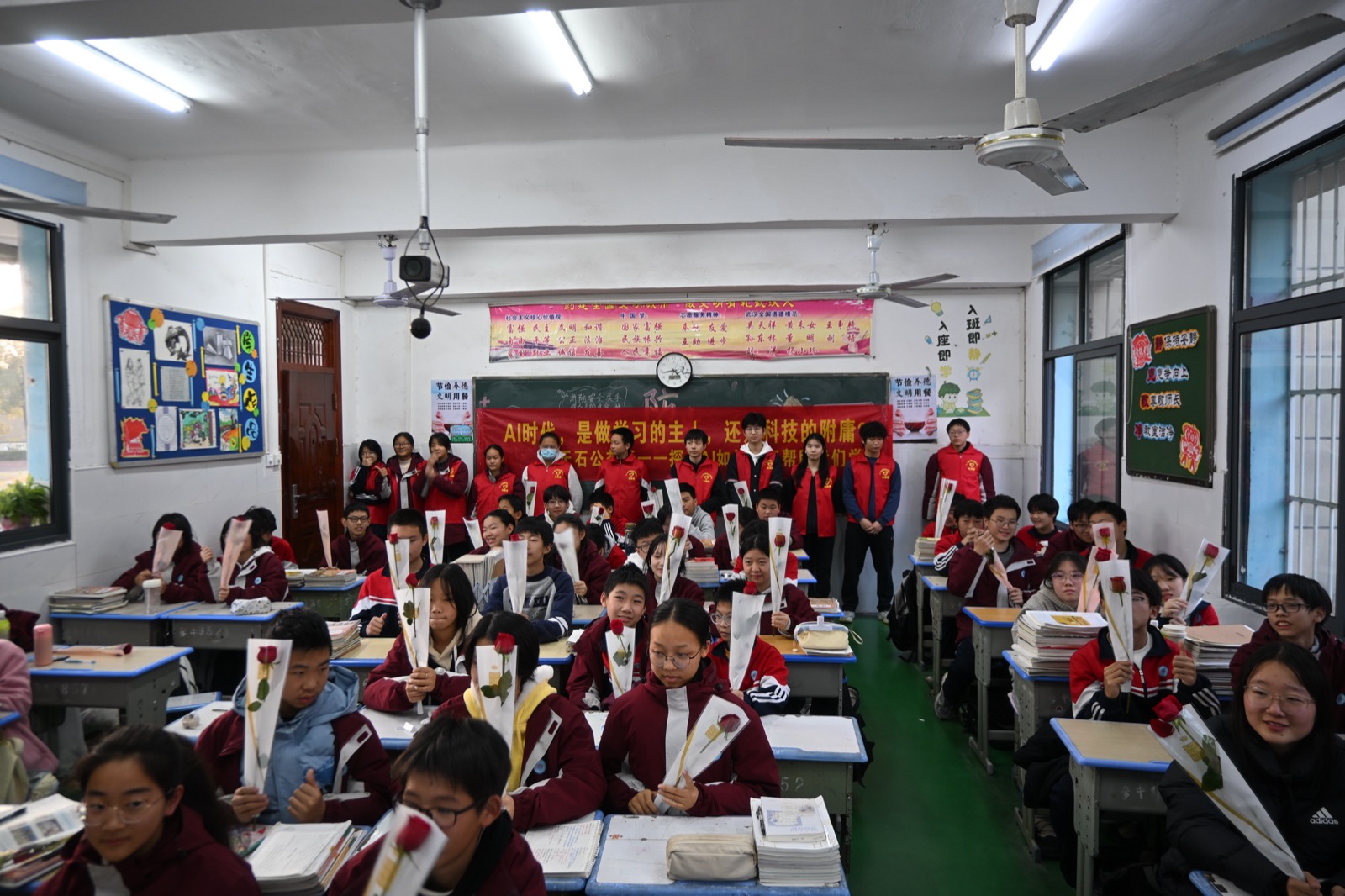
Group photo: volunteers and students with gifts before the event banner
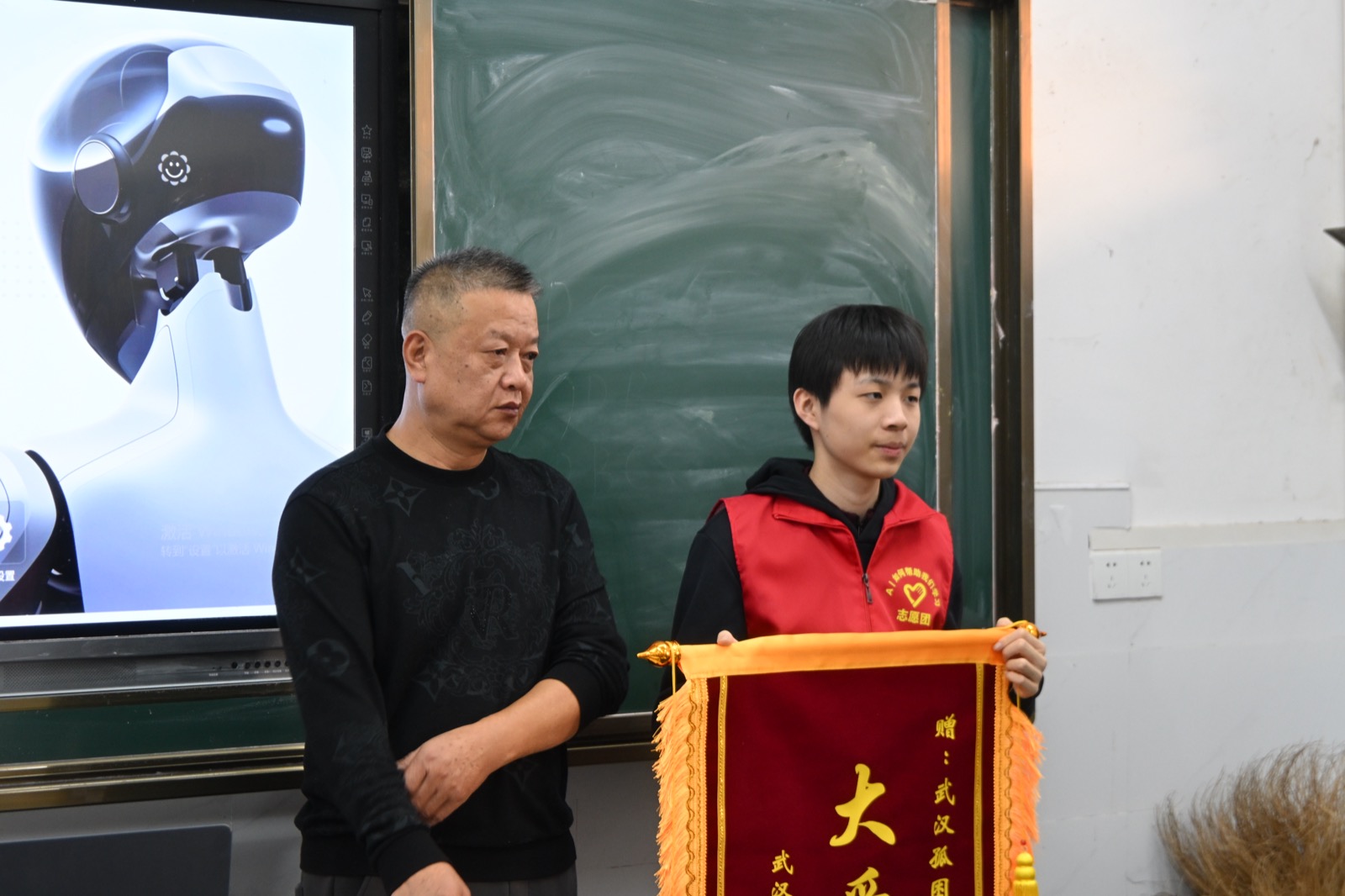
Zhashan Middle School presents a pennant to the volunteer team
Impact
53
Ninth-graders participating throughout
8 Groups
Discussion groups, all presenting posters
3 Awards
Best Creativity · Best Team · Deepest Thinking
Event Details
Date
Friday afternoon, November 21, 2025
Venue
Zhashan Middle School, Caidian District, Wuhan
Format
Keynote + Group Discussion + Poster Showcase + Awards
Keywords
AI · Independent Thinking · Educational Equity · Poster Showcase