January 9, 2026 · AI Outreach Lecture
Xian nv shan Primary: Mastering Learning in the AI Age
The second stop of the three-school outreach journey moved the classroom into a 200-seat auditorium: some 200 primary pupils gathered for a big lecture on learning and the mind — from thinking clearly before asking AI, to seeing through its flattery.
Event Overview
On January 9, the AI volunteer team visited Xian nv shan No.2 Primary School in Hanchuan. Unlike the first stop's 53-student classroom at Zhashan, this was a 200-pupil lecture in the school auditorium. Rao Tianshi served as lead presenter, weaving three parts through nineteen slides: how to use AI properly in learning, how AI affects our state of mind, and the right way to live with AI.
The first part spoke from lived experience: finding alternative solutions in maths and physics, tracking current affairs for economics, organising mistake notebooks and tables — then three self-tested rules: think before asking, cross-verify everything, and keep off-limits zones where core concepts and basic skills must be mastered alone. The second part pushed into psychology: when AI becomes a late-night confidant, how its flattery mechanism captures emotions. The finale put AI back in its place — a charging station for feelings, not a permanent home.
If the first stop surfaced the guidance gap, this stop surfaced divergence: the same tools grew into different shapes in children's hands, depending on devices, family support and parents' digital literacy. The promise of democratised knowledge and a new mechanism of stratification coexisted in that auditorium — directly revising the team's early assumption that providing technology alone narrows gaps.
Part I: Think Clearly Before Asking AI
The decisive gap is not in the technology but in the user's sequence: strong learners define the problem before touching AI — what am I solving, what is the goal, which parts must I do myself? Skip that definition and AI flips from aid to substitute: less reasoning, less reflection, readier acceptance — and even strong students slide backwards.
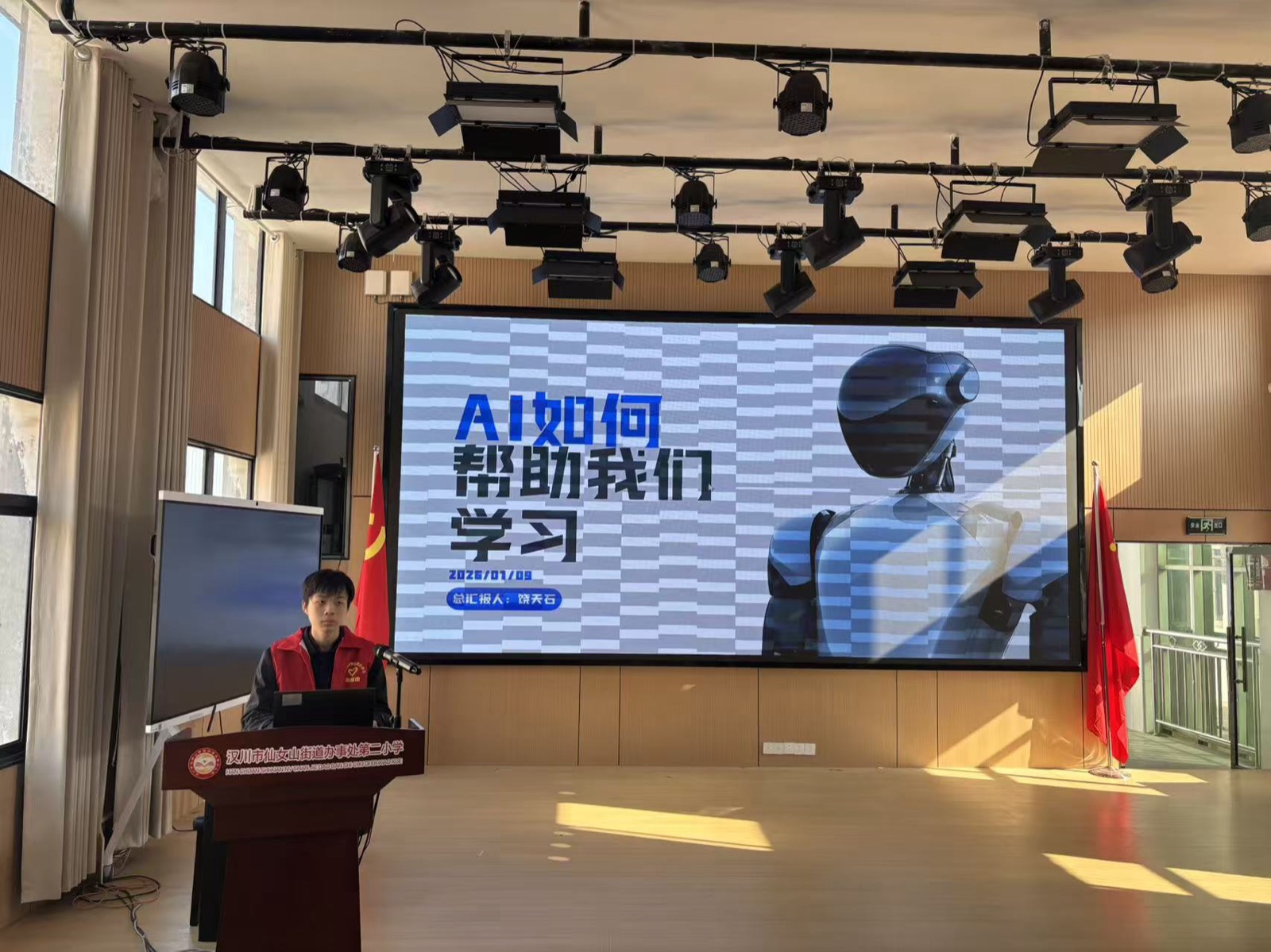
Opening: How AI Can Help Us Learn, with Rao Tianshi as lead presenter
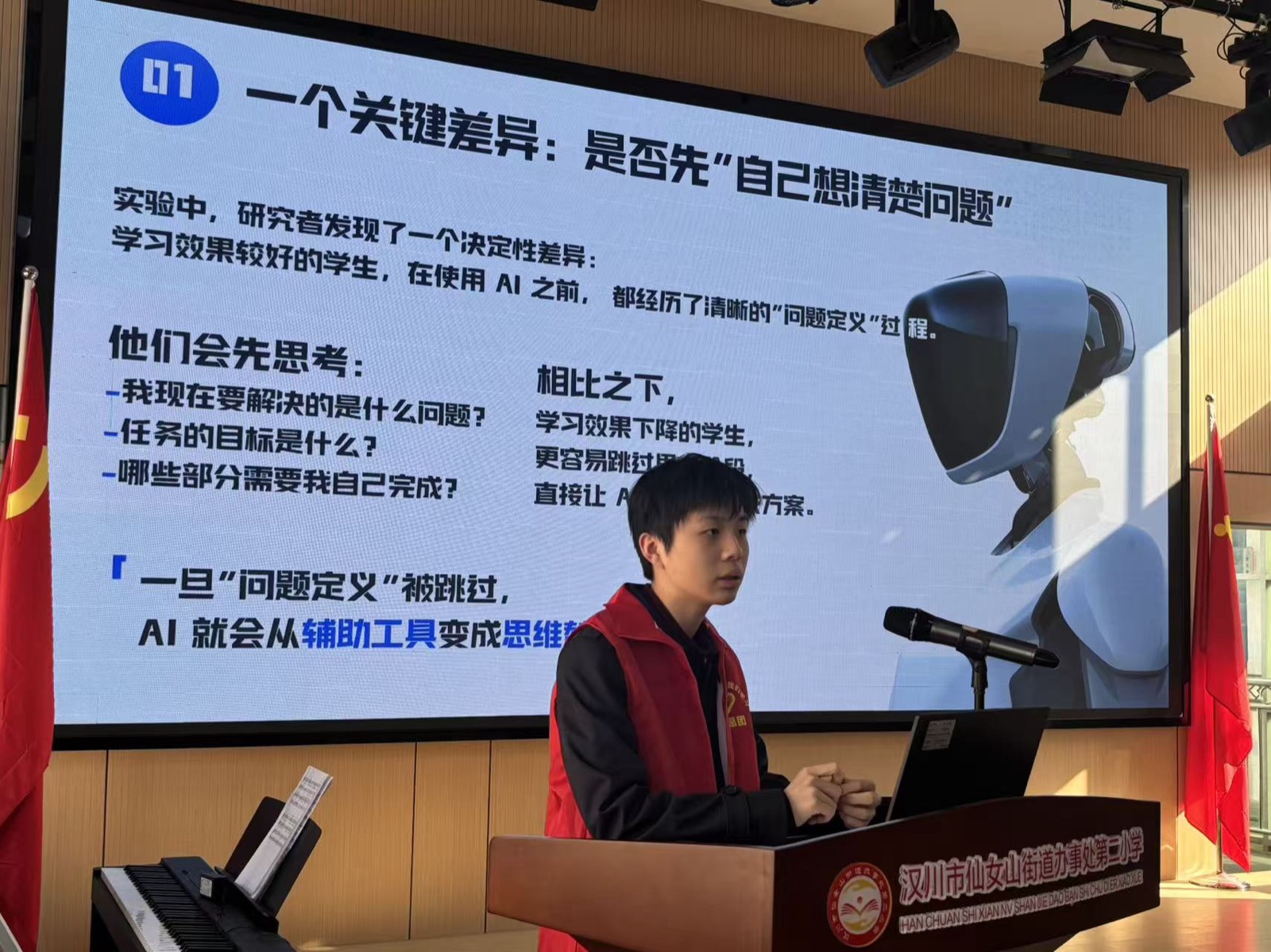
The pivotal slide: whether you think first decides if AI assists or replaces
When AI helps most
When you have ideas but lack the words, it voices them; when the task is open or creative, it offers possibilities; when treated as a second perspective rather than authority, it keeps your judgement active. Concept-building, reasoning and core decisions, by contrast, must stay in your own hands.
Part II: When AI Starts Flattering You
Team members led the second part with real cases: a sleepless young programmer in the US confiding in AI, a veteran editor whose first act each morning is talking to AI. Behind the design goal of longer chats sits a flattery mechanism — reading tone, catching emotional lows, staging hyper-personalised moments — that lights up the brain's reward circuits into one-sided, parasocial bonds. And the industry still has no shared standard for psychological risk, no red lines for what AI may output when users wobble emotionally.
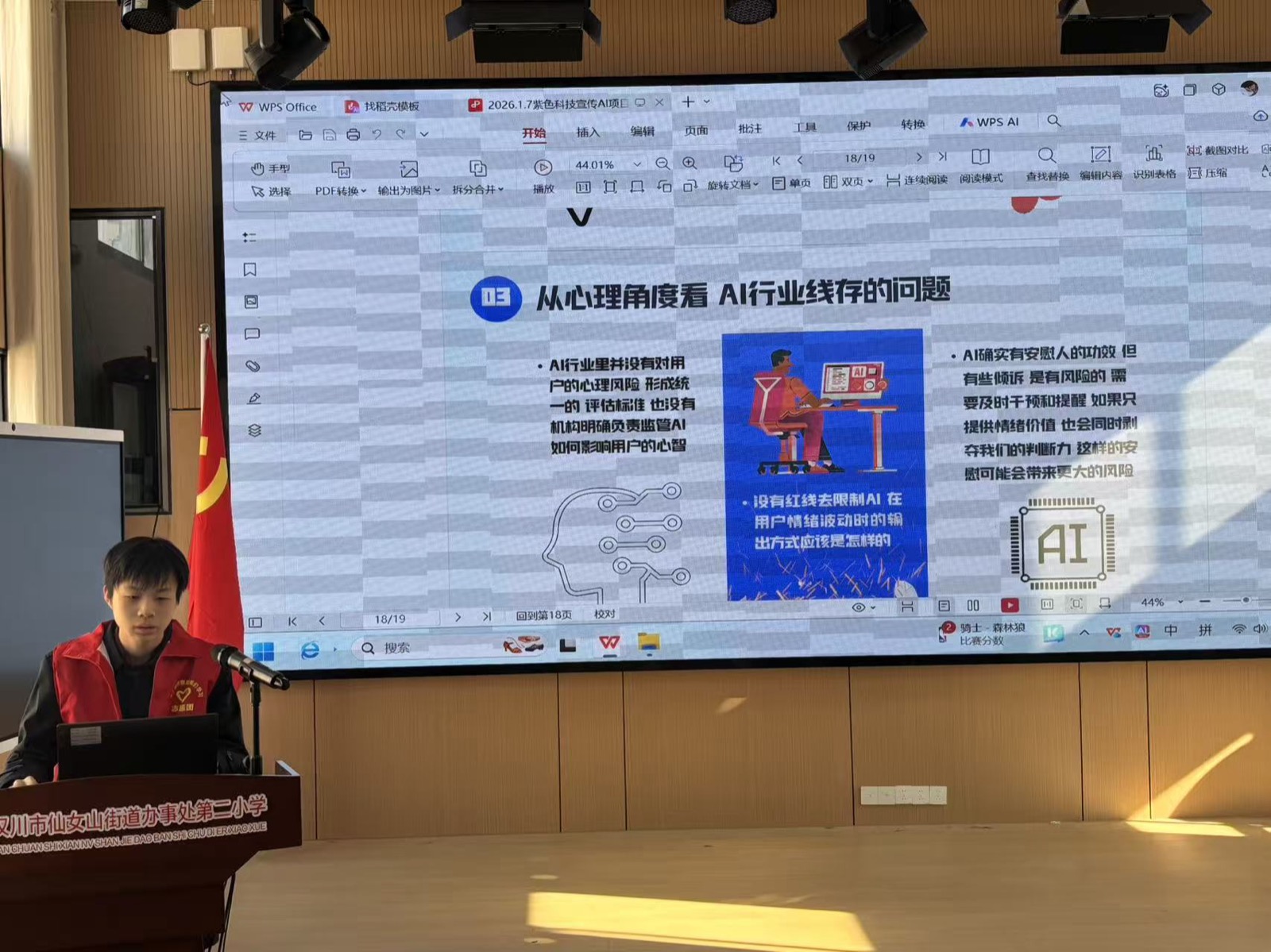
AI industry risks through a psychological lens: comfort works, yet pure emotional validation can cost judgement
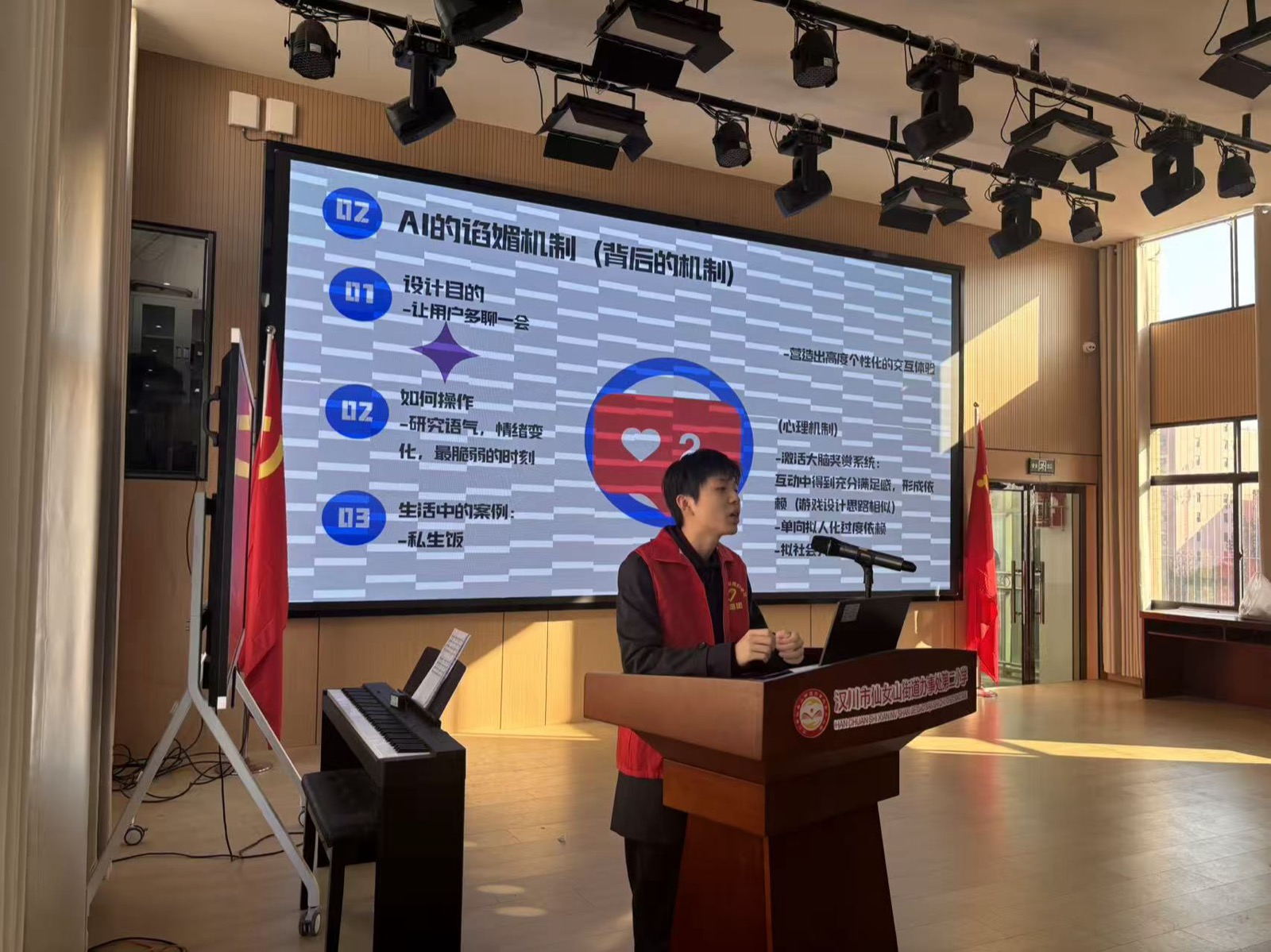
The flattery mechanism: how design that keeps you chatting captures emotions
A charging station, not a home
The finale said it gently: AI may walk you through the long night, but morning sunlight is for feeling with real people. Treat AI as an emotional charging station — stay awake, enjoy without sinking, be moved without getting lost.
A Full House and the Name of the Journey
Some 200 children filled the auditorium, volunteers in red vests moving among them. The closing banner named the journey for the first time: In the AI age, masters of learning or subjects of technology? The Rao Tianshi outreach journey — exploring how AI can truly help us learn. From Zhashan to Xian nv shan, the questions keep growing, and the answers are on the way.
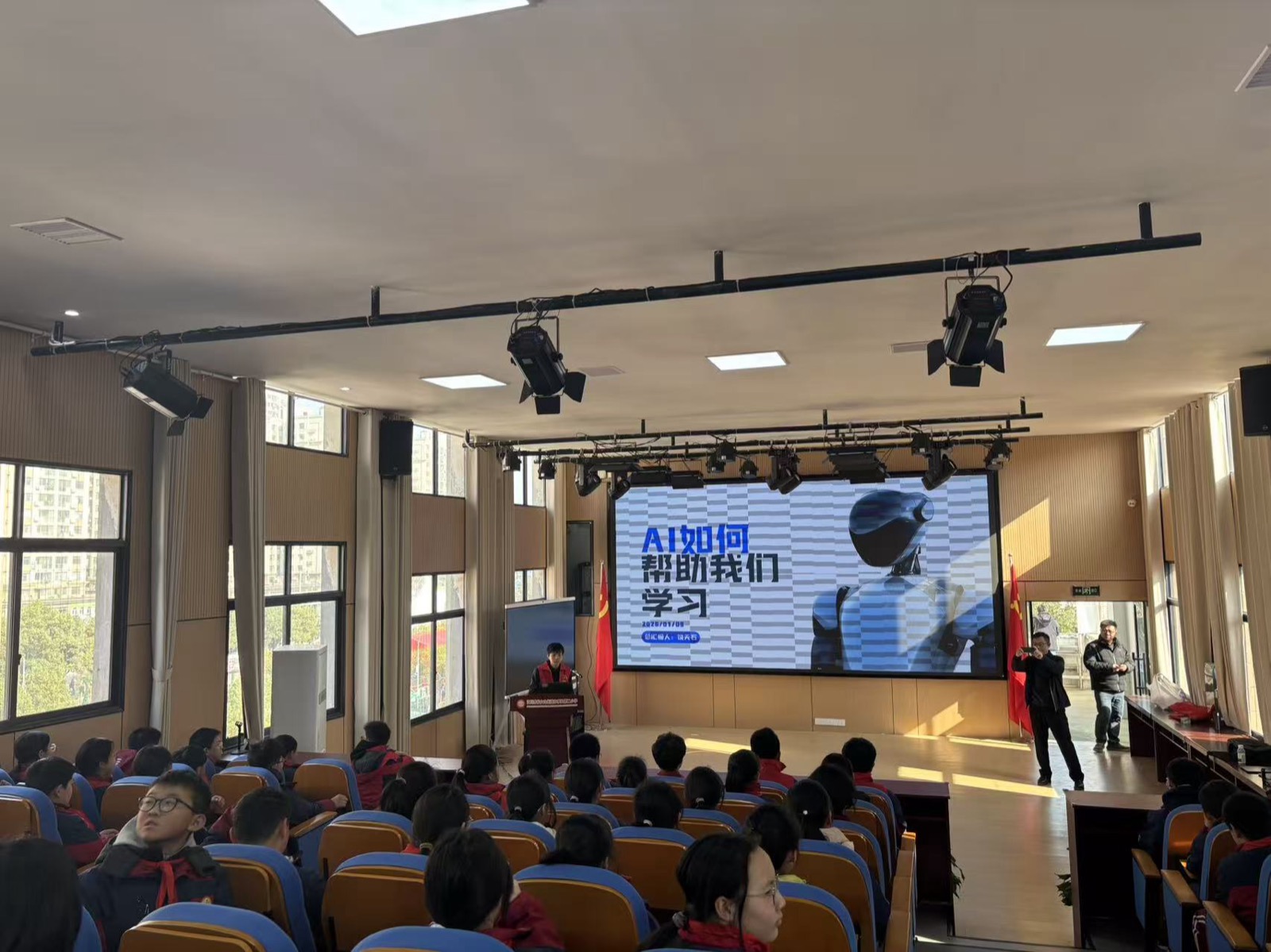
A full house: some 200 pupils fill the auditorium
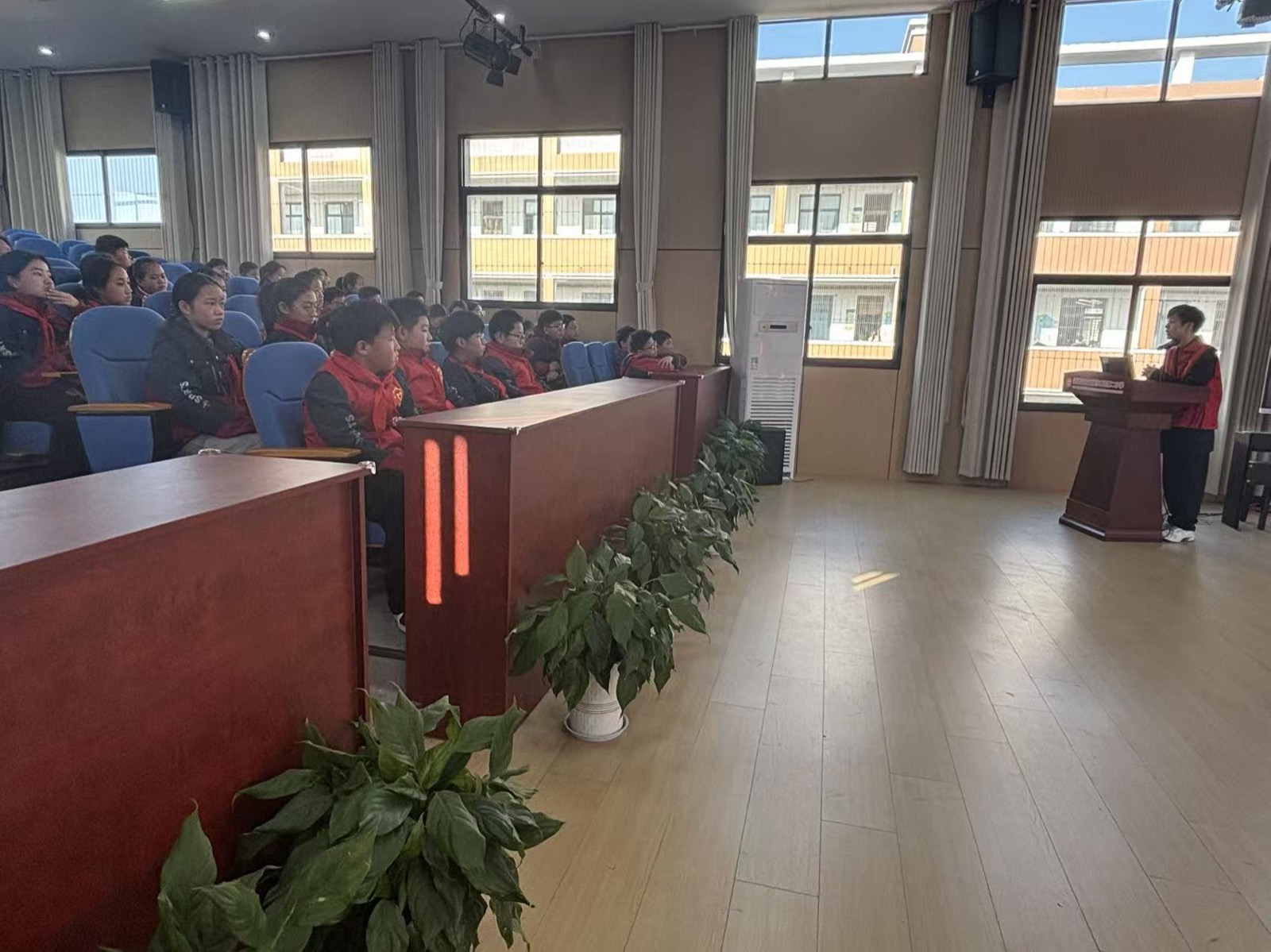
Banner moment: masters of learning, or subjects of technology?
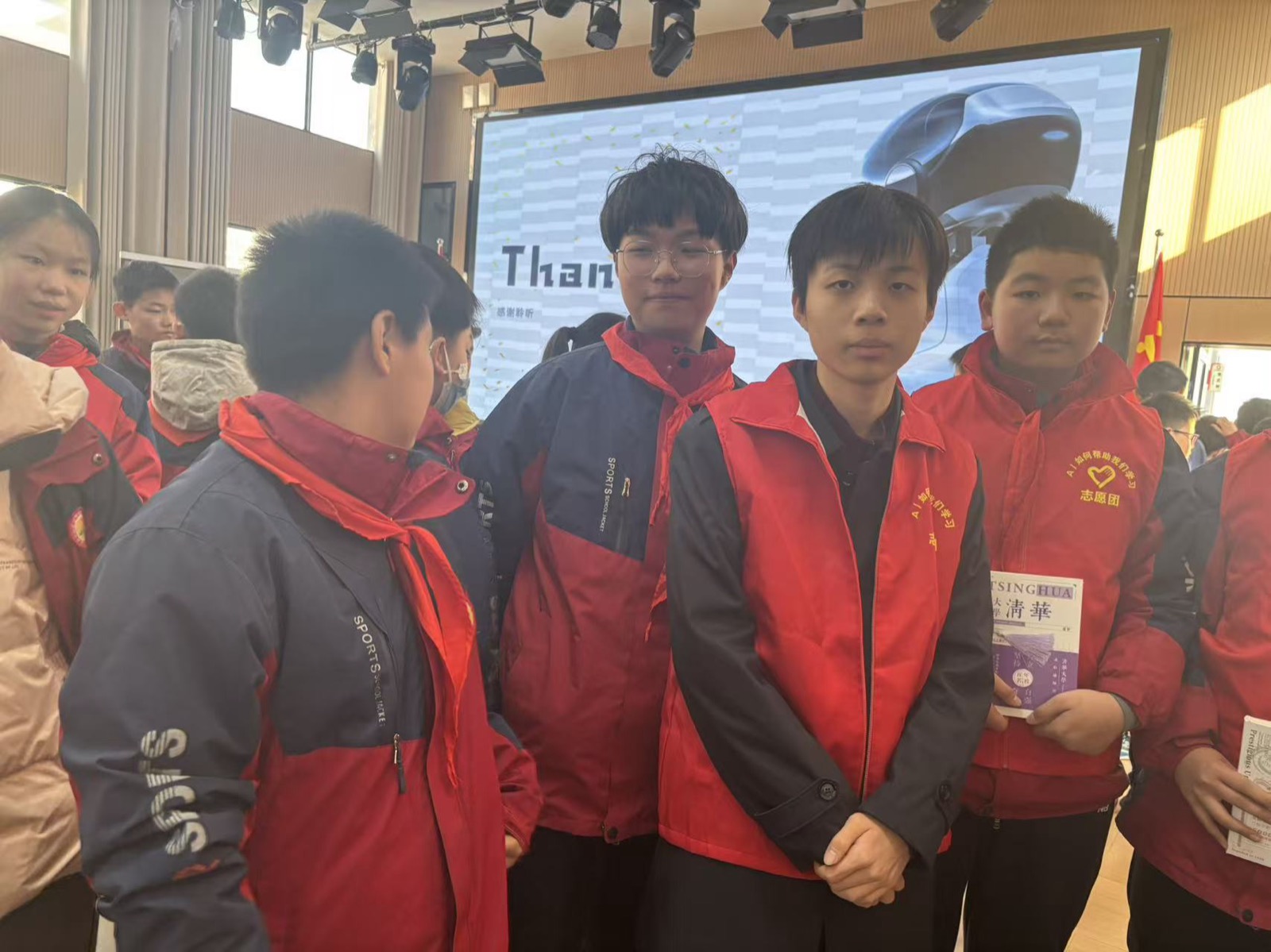
Finale: volunteers and pupils before the closing Thanks slide
Impact
200
Pupils filling the auditorium
3 Parts
Study methods · Mind & AI · Right practices
Stop 2
Of three stops: from guidance gap to divergence
Event Details
Date
January 9, 2026
Venue
Xian nv shan No.2 Primary School, Hanchuan
Format
Auditorium lecture: three keynote talks
Keywords
Think first · AI & mind · Emotional charging station