June 26, 2026 · AI Outreach Lecture
Luxiang Jianhe Branch: Keeping Independent Thinking at the Root of Learning
The third stop of the three-school journey took the team to a primary school on the urban-rural fringe for a full two-hour session: think independently first, then let AI in. A month later, the school replied with an officially sealed letter of thanks.
Event Overview
On Friday, June 26, Rao Tianshi — then in his second year of high school — gathered fellow students and brought the AI volunteer team to Luxiang Jianhe Branch of Luxiang Experimental Primary School in Hongshan District, Wuhan, for a dedicated lecture titled: In the AI Age, Masters of Learning or Subjects of Technology? How AI Can Truly Help Us Learn. The team prepared the content with care and brought refined, practical school supplies for every student present.
The two-hour session was plain-spoken and hands-on: from AI's benefits and pitfalls in learning, to three tested rules — think before asking, cross-verify, keep off-limits zones — to practical study-planning skills with AI, such as personal checklists built around weak subjects, mistake notebooks, and high-frequency error reviews. Children raised hands eagerly and competed to answer, taking a full harvest home.
If the first stop asked who gets access and the second watched who uses it well, the third was a deliberate intervention: confine AI to expression, organisation and feedback, and let complete independent thinking go first. The three questions now form one line — what conditions make AI a capability amplifier rather than an inequality amplifier?
Method: Prompt Thinking, Not Lazy Thinking
The hardest core of the lesson was a five-step heuristic for learning with AI, demonstrated live on stage: pose the question, analyse it, break down the knowledge points, synthesise an approach, solve the problem. The team hammered one point home: AI is not for getting answers directly, but for borrowing its prompts and guidance — think independently and derive things yourself first, then build your own solution path. AI helps us learn how to learn; it does not finish the work for us. Train prompt thinking, not lazy thinking.
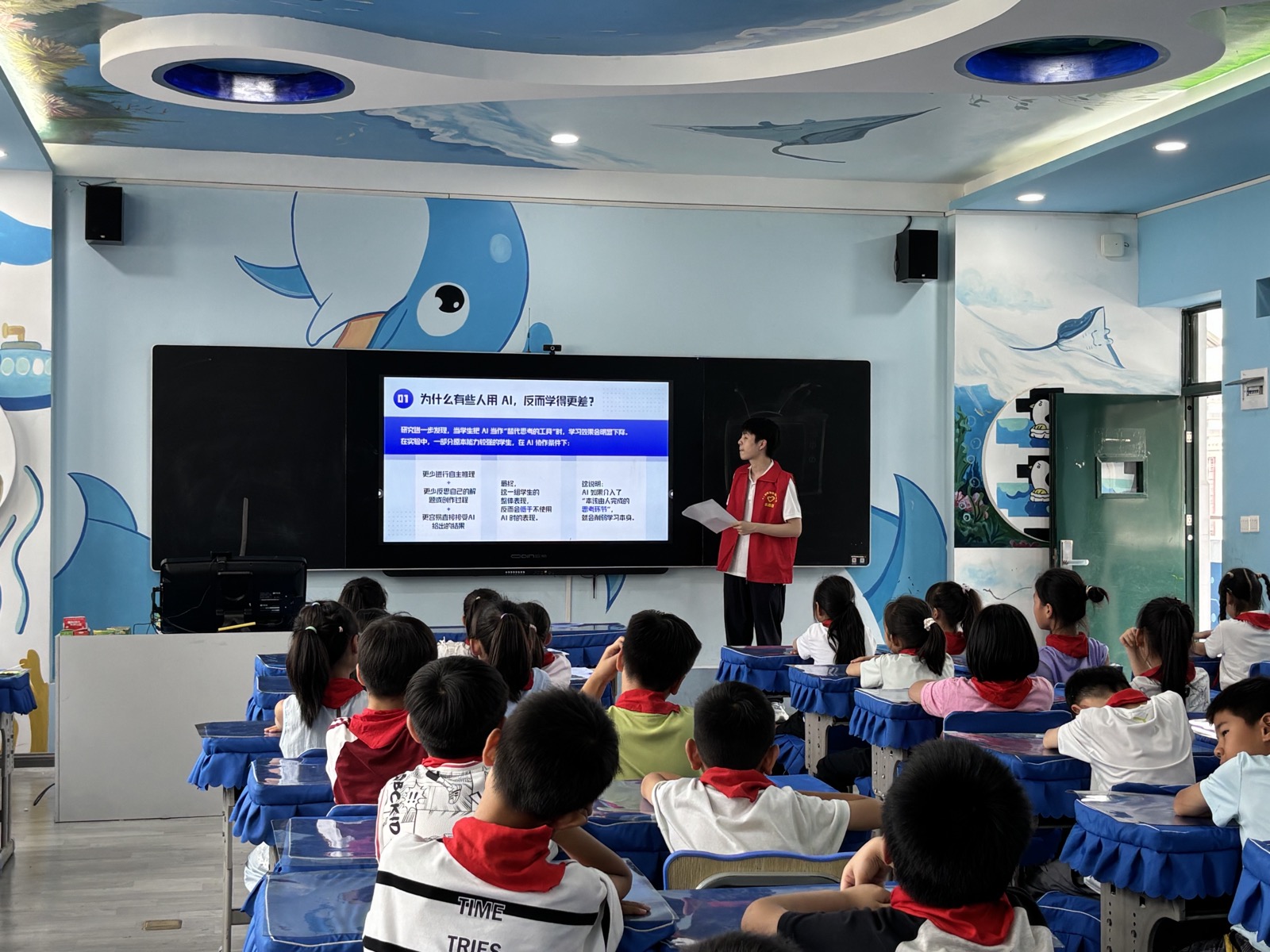
Three rules: think before asking, cross-verify, keep off-limits zones
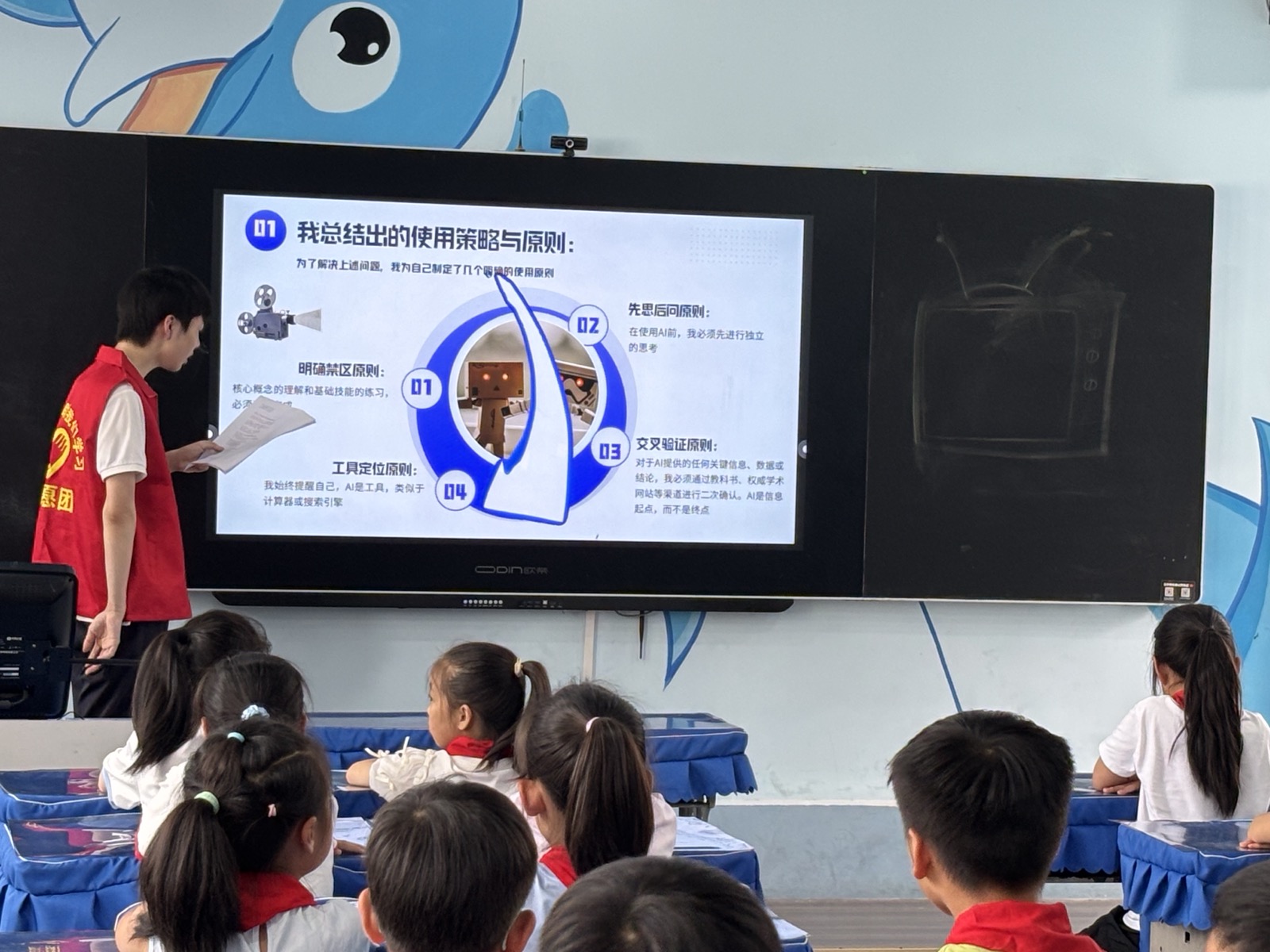
Live demo: the five-step heuristic showing AI as guide, not substitute
Why Here: Realities on the Urban-Rural Fringe
Jianhe Branch sits on Hongshan's urban-rural fringe, where most parents have limited schooling and can hardly tutor their children after class; many pupils lack study drive, and after-school questions often go unanswered. AI opened a new learning path that helps fill the after-school tutoring gap — yet some students copy AI-supplied answers without thinking, which over time can erode independent analysis and problem-solving. The messy online environment also left teachers and parents uneasy about children using AI.
The lecture answered that worry head-on: teaching students to use AI for questions and answers properly and rationally, balancing technological convenience with independent thought, protecting the capacity for inquiry. In the ocean-themed classroom, some fifty children listened intently — for them, this was never just a tech talk, but a conversation that took them seriously.
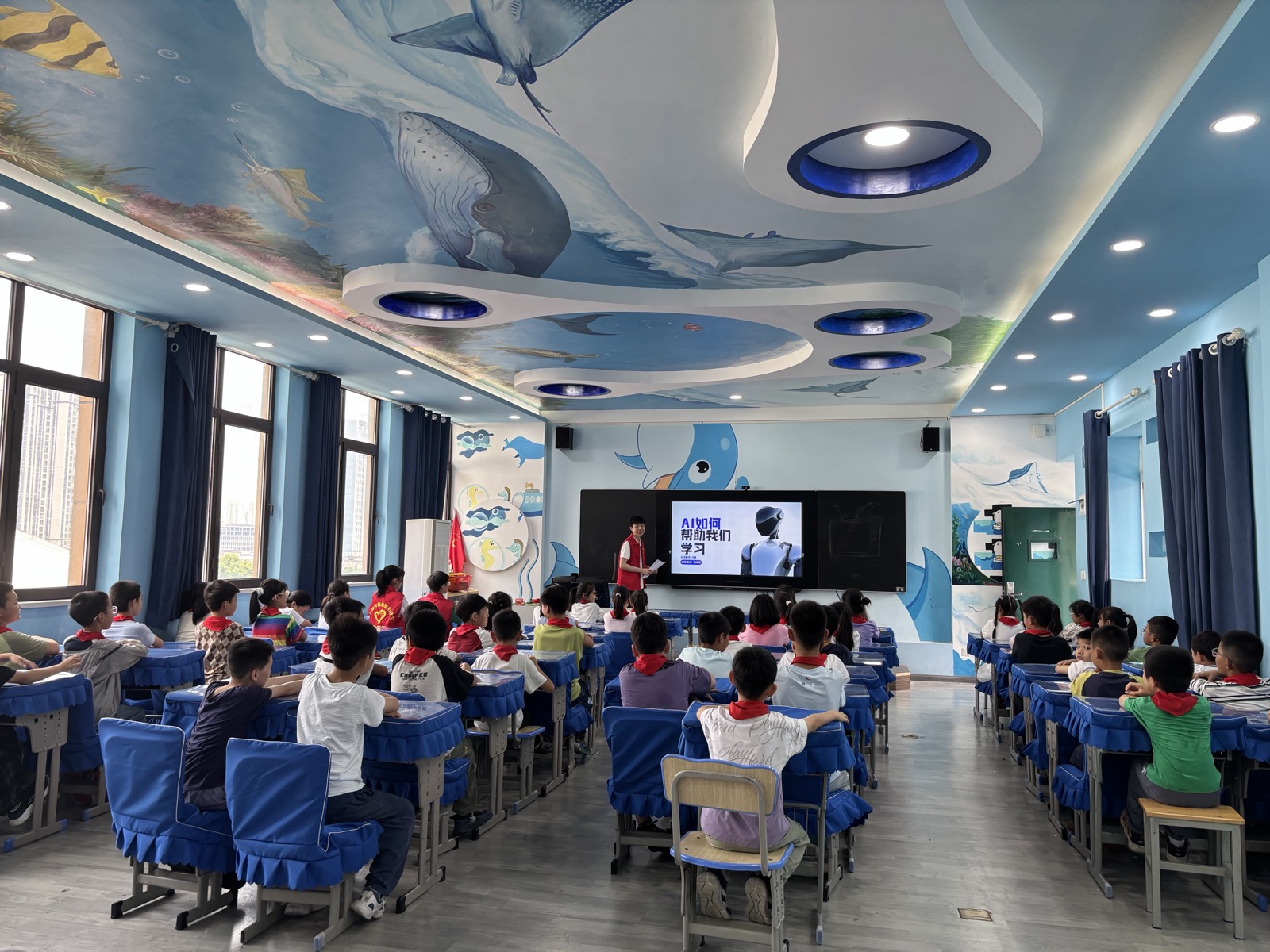
The ocean-themed classroom: some fifty children listening intently
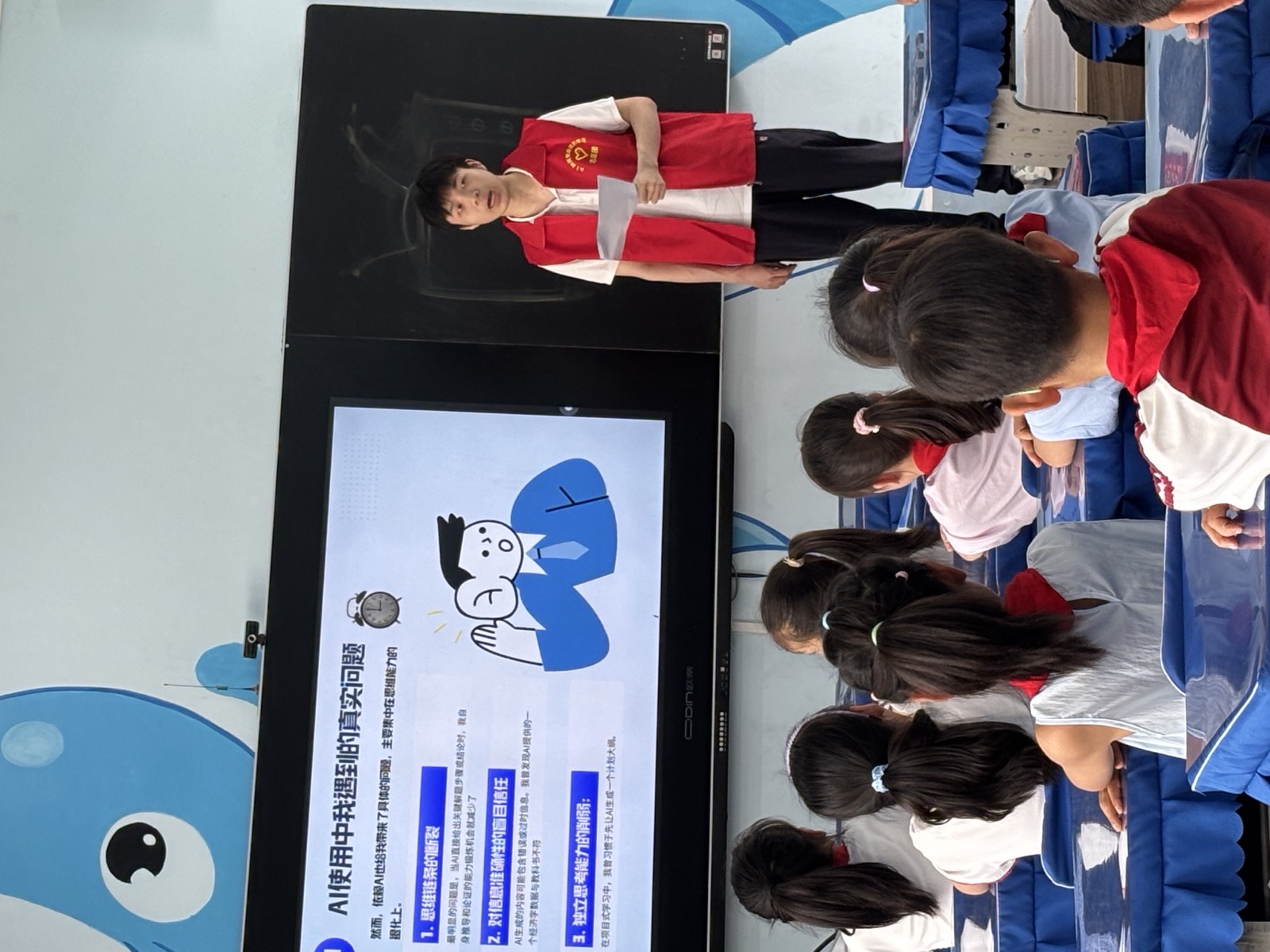
Opening: AI's benefits and pitfalls in learning, laid on the table first
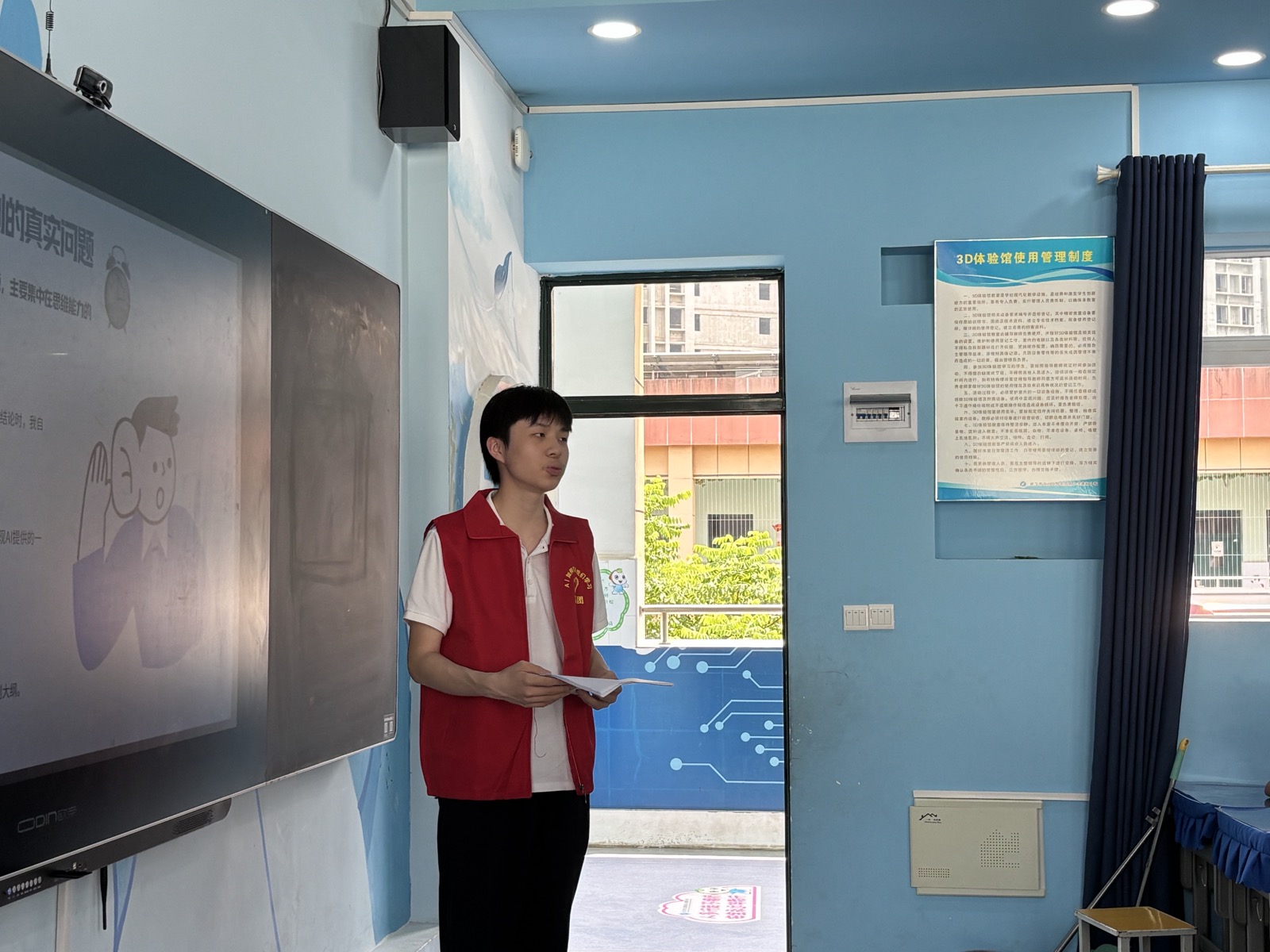
One step further: AI and the mind — the mechanism behind the flattery
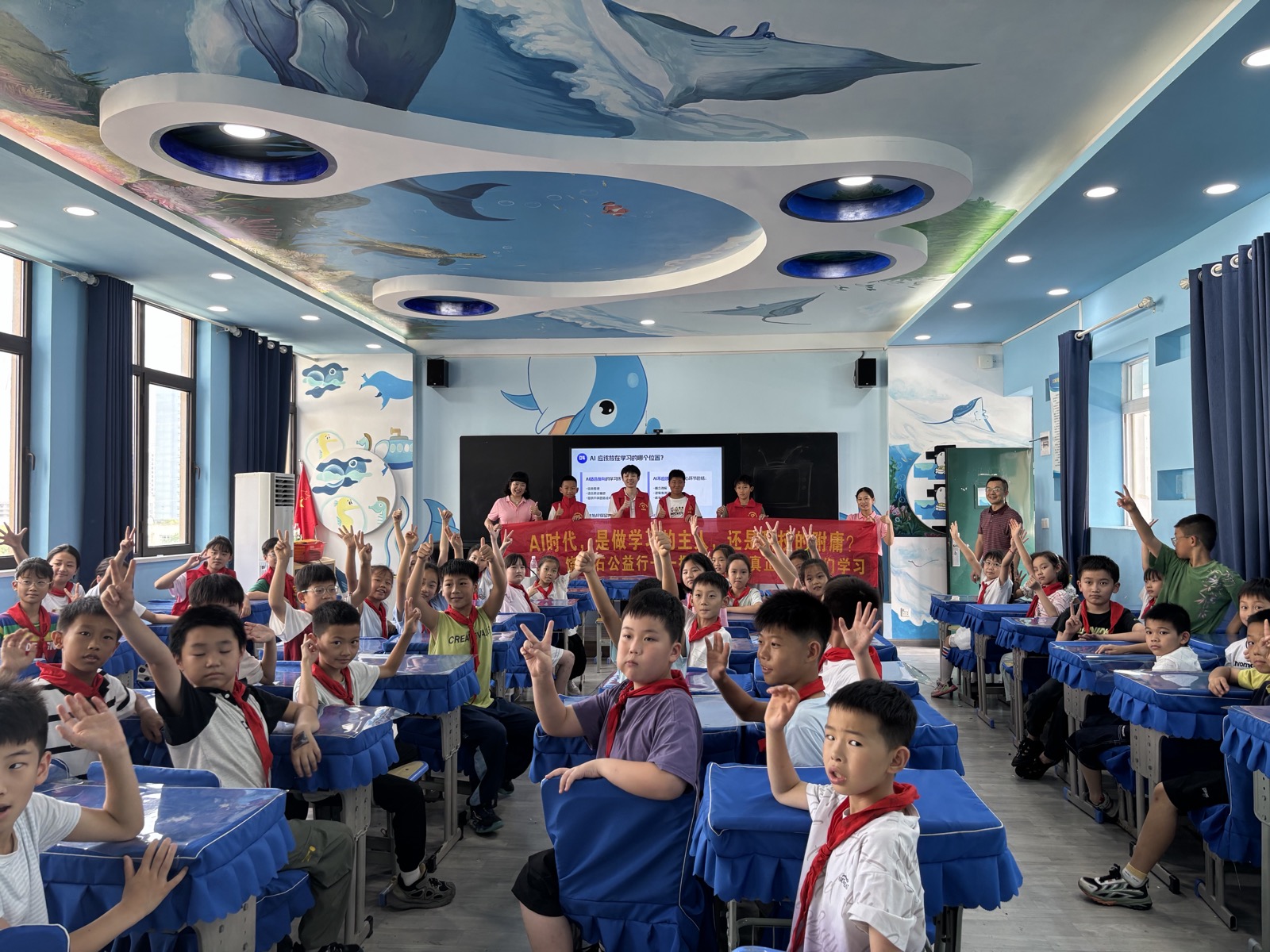
Rush-to-answer moment: hands shoot up, the room buzzing
A Letter of Thanks, Officially Sealed
On June 30, all teachers and pupils of Jianhe Branch sent a Letter of Thanks to the Rao Tianshi AI Volunteer Team, stamped with the school's official seal. It reads that the lecture widened the children's technological horizons, and that many students no longer fear hard problems, with initiative and confidence both lifted — exactly the change the team most hoped to see.
You emphasised in particular that AI is not for getting answers directly, but for borrowing its prompts and guidance — thinking independently and deriving things first, then gradually forming one's own approach, keeping independent thinking at the very root of learning.
— From the Jianhe Branch letter of thanks, June 30, 2026
AI helps us learn how to learn; it does not finish the work for us. What matters is training prompt thinking, not lazy thinking — helping everyone find the balance between technological convenience and independent thought, and protecting students' capacity for independent inquiry.
— From the Jianhe Branch letter of thanks, June 30, 2026
The letter closes by wishing every volunteer progress in studies and a bright future, and that the flame of volunteering pass on forever. From Zhashan's posters to Xian nv shan's auditorium to this letter from Jianhe, the team's early assumptions were rewritten twice by reality across three stops — and this letter is reality's first formal reply.
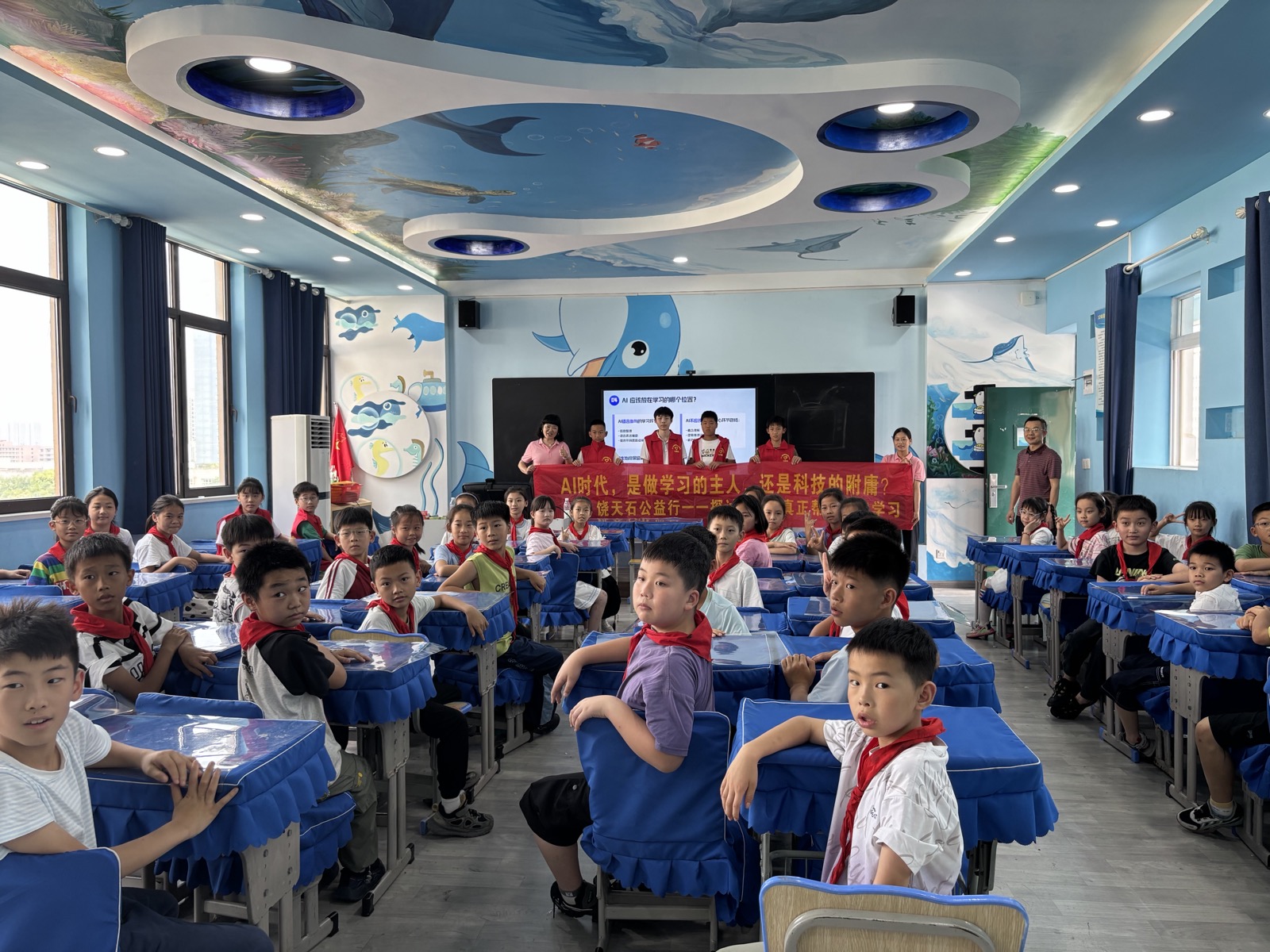
Banner moment: masters of learning, or subjects of technology?
Impact
50
Pupils through the full two hours
5 Steps
Heuristic chain: from question to solution
Stop 3
Honoured with the school's letter of thanks
Event Details
Date
Friday, June 26, 2026
Venue
Luxiang Jianhe Branch, Luxiang Experimental Primary School, Hongshan, Wuhan
Format
Two-hour lecture + live demos + interactive Q&A
Keywords
Prompt thinking · Roots of learning · Urban-rural equity